Tuckpointing and Mortar Repair in Dublin, Ohio
Request a Quote!
Contact Us
Mortar joints protect brick and stone walls by holding masonry units together and helping the wall manage normal exposure and movement. When mortar begins to crack, crumble, or wash away, water can enter the joints and reach deeper parts of the masonry. Dublin Masonry provides tuckpointing and mortar repair for homes and properties throughout Dublin, Ohio, and nearby communities.
The right repair depends on the condition of the existing mortar, the masonry around it, and the cause of the deterioration. We review the affected area before recommending a scope so sound mortar can remain in place whenever practical. Call (614) 708 7020 or complete the Request a Quote form to discuss your project.
Signs Your Mortar Joints Need Attention
Mortar deterioration often develops gradually. Common warning signs include joints that are cracked, recessed, loose, powdery, or missing in sections. You may also notice small pieces of mortar near the base of a wall, dark moisture marks, loose brick, or plants growing from open joints.
Some surface wear is expected as masonry ages, but deep or widespread erosion can leave brick and stone more vulnerable to moisture. A review can help determine whether the condition is limited to a few joints or affects a larger part of the wall.
What Tuckpointing Involves
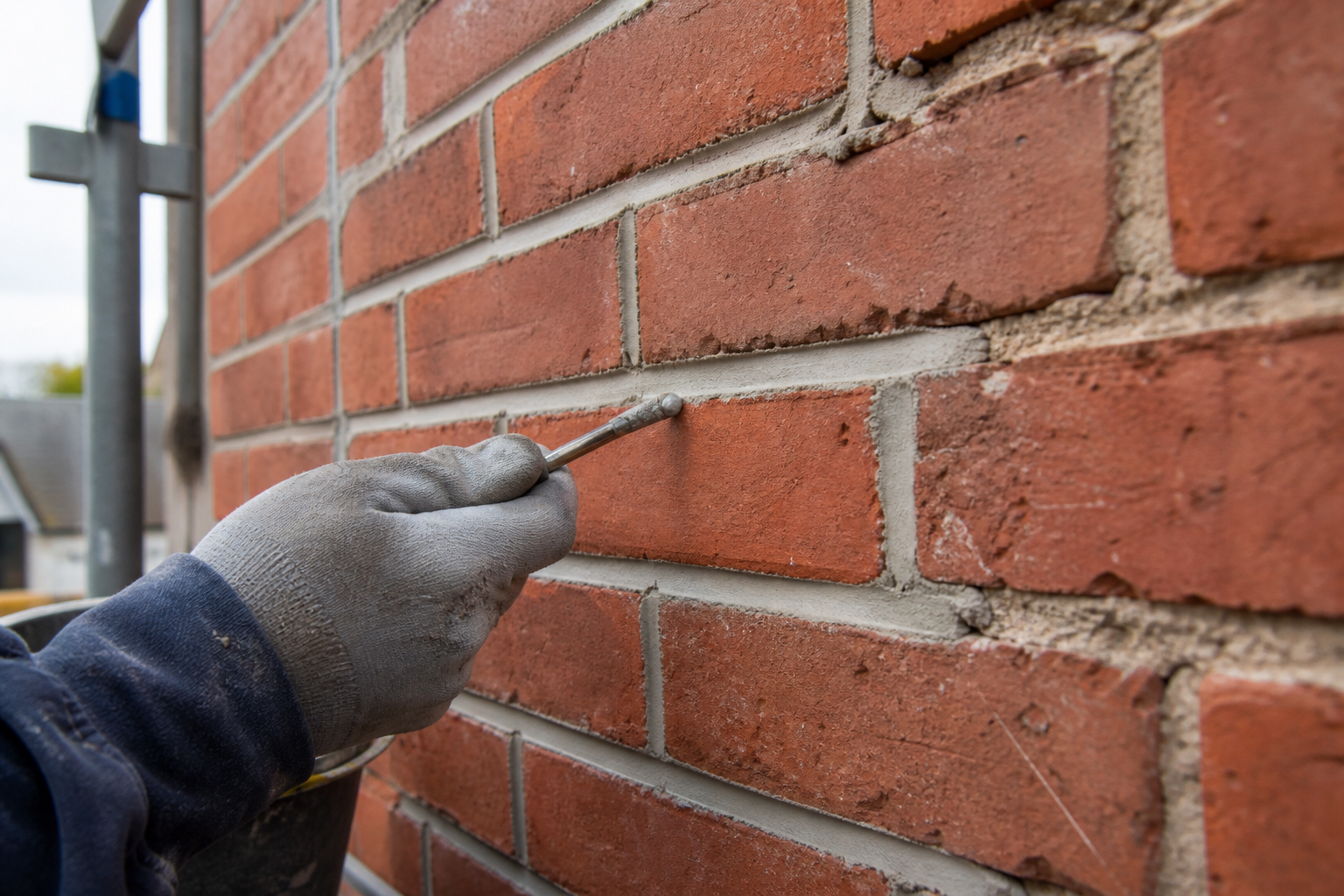
Tuckpointing begins by removing deteriorated mortar from the affected joints to an appropriate depth. The joints are cleaned so the replacement mortar can bond to a prepared surface. New mortar is then placed and compacted into the joints before the surface is finished to complement the existing masonry.
Preparation matters. Placing a thin layer of mortar over loose or failing material may improve the appearance briefly, but it does not create the same bond as a properly prepared joint. The repair should address unsound mortar rather than cover it.
Mortar Compatibility Matters
Replacement mortar should be compatible with the brick or stone around it. Mortar that is too hard can place unnecessary stress on softer masonry units. Mortar that is poorly matched may also differ noticeably in color, texture, and joint profile.
We consider the age and type of masonry, the condition of the original joints, and the exposure of the wall. Exact color matching cannot always be guaranteed because older mortar changes as it weathers, but thoughtful material selection and finishing can help the repair blend naturally.
Localized Mortar Repair
Not every wall requires complete tuckpointing. When deterioration is limited to a smaller area, localized mortar repair may be appropriate. This can include open joints around a few bricks, worn mortar near a corner, or damage caused by a nearby crack or displaced unit.
Localized work should still include proper joint preparation. The surrounding masonry is reviewed so loose brick, damaged stone, or another contributing condition is not overlooked. If individual units also require replacement, brick and stone repair can be included in the project scope.
Chimney Mortar Joint Repair
Chimneys receive direct exposure to rain, snow, wind, and repeated temperature changes. Mortar joints near the top of a chimney can deteriorate faster than protected wall areas. Open joints may allow water to enter the chimney masonry and contribute to loose brick or surface damage.
Chimney mortar repair may involve tuckpointing selected areas, replacing damaged brick, or addressing the crown and other water entry points. A chimney with extensive movement or widespread deterioration may require partial rebuilding rather than joint repair alone. Our chimney repair and rebuilding page explains those broader options.
Central Ohio Weather and Mortar
Dublin masonry experiences rain, snow, humidity, and repeated freezing and thawing. Water that enters an open joint can expand when it freezes. Over time, this pressure can widen cracks, loosen mortar, and contribute to damage in nearby brick or stone.
Drainage, roof runoff, wall caps, flashing, and grading can all affect the amount of moisture reaching masonry. Repairing joints is important, but visible water entry conditions should also be considered when planning the work.
When Repointing Is Not Enough
Tuckpointing restores deteriorated mortar joints, but it does not correct every masonry problem. A wall that is bowing, leaning, or moving may need a different repair plan. Brick with severe spalling may need replacement, and a loose section may require partial rebuilding.
Cracks that continue to widen or appear with displacement deserve closer attention. If the visible condition suggests movement beyond the mortar joints, an evaluation by an appropriate structural professional may be recommended before masonry repairs proceed.
Our Tuckpointing Process
The process starts with a phone call or a completed Request a Quote form. Tell us where the masonry is located, what you have noticed, and the city or ZIP code for the property. After we connect, we can arrange a time to review the joints and discuss the project.
We consider the depth and extent of deterioration, the condition of the masonry units, access, material needs, and visible moisture conditions. The quote is based on the work identified for the property. Any concealed conditions discovered during preparation should be discussed before additional work is performed.
Tuckpointing and Mortar Repair Frequently Asked Questions
What is the difference between tuckpointing and repointing?
The terms are often used interchangeably in everyday conversation. Repointing generally describes removing deteriorated mortar and installing new mortar. Traditional tuckpointing may also involve contrasting lines used to create a refined joint appearance.
Can new mortar match old mortar?
A close match is often possible, but an exact match cannot be guaranteed. Age, weathering, original materials, and previous repairs can affect the finished color and texture.
Can mortar be placed over existing joints?
Loose and deteriorated mortar should be removed to an appropriate depth before new mortar is placed. A thin surface coating over unsound material is unlikely to provide a durable repair.
Request a Quote!
If mortar joints are cracking, crumbling, or missing from your Dublin area property, contact Dublin Masonry to discuss tuckpointing and mortar repair. Call (614) 708-7020 or complete the Request a Quote form to get started.