
Retaining Wall Repair and Construction in Dublin, Ohio
Request a Quote!
Contact Us
Retaining walls support soil, shape usable outdoor areas, and help manage changes in grade. When a wall begins to lean, crack, separate, or lose material, the problem can affect both the appearance and function of the surrounding property. Dublin Masonry provides retaining wall repair and construction for residential properties in Dublin, Ohio, and nearby communities. Call (614) 708-7020 or complete the Request a Quote form to discuss your wall.
Retaining Wall Problems We Address
Visible movement is one of the clearest signs that a retaining wall needs attention. A wall may lean outward, develop stair shaped cracks, separate at corners, or show displaced blocks and stones. Mortar joints can erode, caps can loosen, and individual masonry units can crack or spall. Water may collect behind the wall or wash soil through open joints. We evaluate the visible condition of the wall and the surrounding grade before recommending a repair or construction plan.
Why Retaining Walls Move
A retaining wall must resist pressure from the soil behind it. That pressure increases when drainage is limited or when the soil becomes saturated. Movement can also result from insufficient footing support, poor wall geometry, settlement, tree roots, or repeated freezing and thawing. Repairing only the visible crack may not provide a lasting result when the source of movement remains. Our approach considers the masonry, drainage, grade, and support conditions that can influence the wall.
Retaining Wall Repair
Repair may be practical when damage is limited and the wall remains generally stable. Work can include replacing cracked masonry units, resetting loose caps, rebuilding a damaged section, renewing deteriorated mortar, or correcting localized separation. The right method depends on the wall material, the amount of movement, and the condition of the base. We explain which portions appear reusable and which portions should be removed and rebuilt.
Partial Wall Rebuilding
Some walls have one failed area while the remaining sections are still serviceable. A partial rebuild can address a leaning corner, displaced run, damaged end, or area affected by water. The failed section is carefully removed so the underlying conditions can be examined. Rebuilding then focuses on proper alignment, sound support, compatible materials, and appropriate drainage for the site.
New Retaining Wall Construction
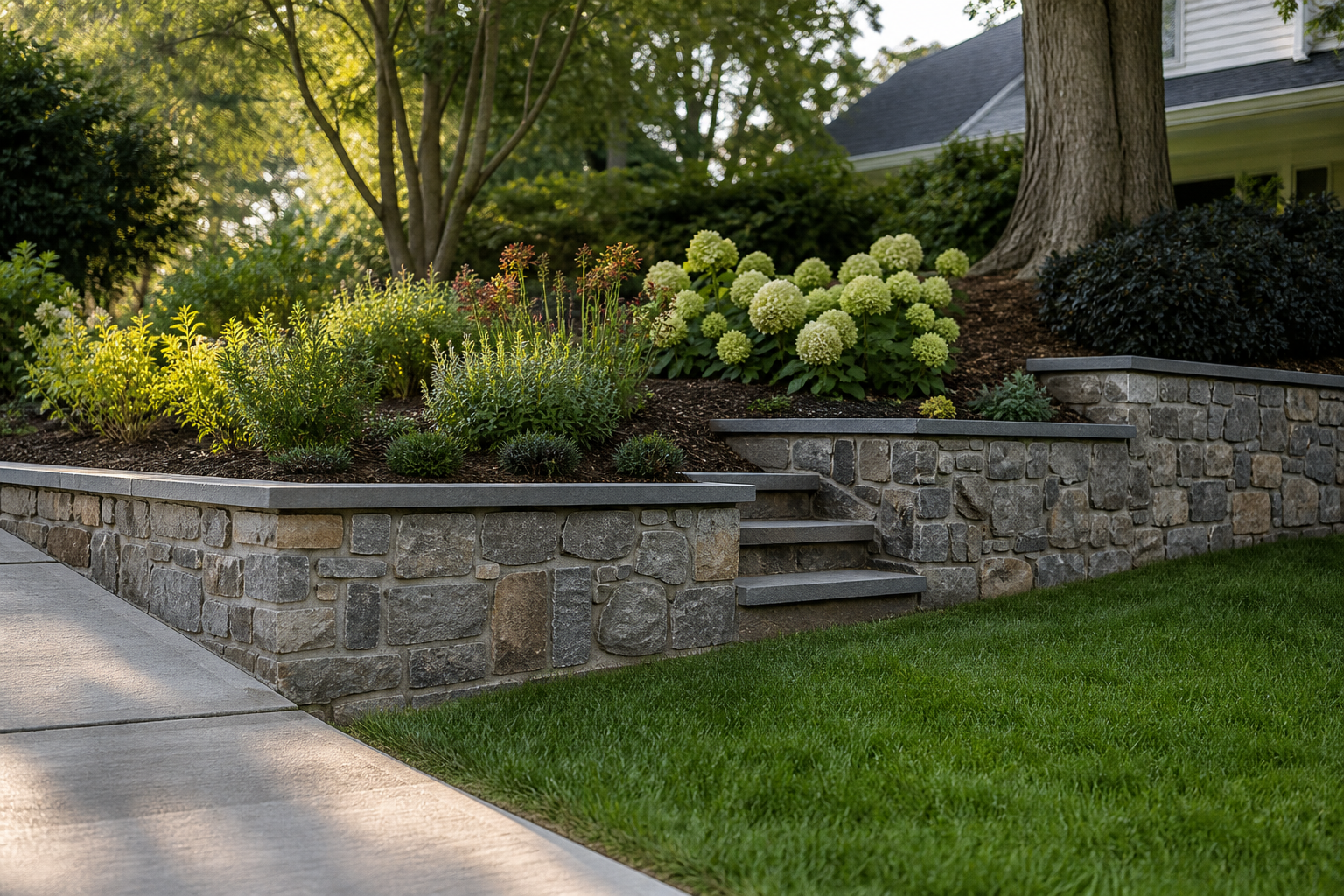
A new retaining wall can create a defined planting area, support a slope, improve access, or provide a cleaner transition between elevations. Planning begins with the intended function of the wall and the amount of soil it must retain. Material choice, wall height, drainage, base preparation, and nearby structures all influence the design. We build masonry retaining walls that fit the property and support the planned use of the space.
Brick, Stone, and Concrete Masonry Walls
Retaining walls can be constructed or repaired with several masonry materials. Brick can complement a traditional home or existing landscape features. Natural or manufactured stone can create a more textured appearance. Concrete masonry units provide a practical structural base and may be finished to suit the surrounding property. We discuss material options based on the wall condition, desired appearance, and project scope.
Drainage Behind the Wall
Water management is an important part of retaining wall performance. Water trapped behind masonry increases pressure and can contribute to movement during cold weather. Depending on the project, drainage planning may include free draining material, drainage outlets, or adjustments to the surrounding grade. Conditions vary from one property to another, so the solution should respond to the actual site rather than rely on a cosmetic surface repair.
Matching Existing Retaining Wall Masonry
When only part of a wall needs rebuilding, the new work should relate naturally to the remaining masonry. We compare color, texture, size, bond pattern, cap style, and mortar appearance. Exact matches are not always available, especially with older or weathered materials, but careful selection can reduce unnecessary contrast. We review realistic options before the work begins.
Retaining Walls Near Patios and Walkways
Retaining walls often connect with patios, steps, driveways, planting beds, and walkways. Movement in one element can affect the alignment or drainage of another. We consider these connections when evaluating the wall so repaired or new masonry works with the surrounding hardscape. This can also help identify whether adjacent areas should be addressed as part of the same project.
Our Retaining Wall Process
The process begins with a conversation about what you have noticed and what you want the wall to accomplish. We then review the visible masonry, alignment, grade, drainage, nearby surfaces, and accessible support conditions. After the scope is defined, we explain the recommended work and prepare a quote. During construction, the focus remains on sound preparation, orderly masonry work, and a finished appearance that suits the property.
When a Retaining Wall Should Be Evaluated
Contact us when a retaining wall is leaning, bulging, cracking, shedding mortar, losing blocks or stones, or allowing soil to wash through. Standing water and repeated dampness behind the wall also deserve attention. Early evaluation can clarify whether localized repair is still reasonable or whether a larger rebuild should be planned.
Frequently Asked Questions
Can a leaning retaining wall be repaired?
It depends on the amount of movement and the conditions behind and below the wall. Minor localized problems may allow a partial repair. Significant leaning or widespread displacement may require removal and rebuilding.
Do all retaining wall cracks mean the wall is failing?
Not every crack has the same cause or urgency. The crack pattern, wall movement, drainage, and support conditions should be considered together before deciding on the work.
Can you replace only one damaged section?
Yes, when the remaining wall is stable and the failed area can be separated and rebuilt properly. We evaluate how the repaired section will connect with the existing masonry.
Why is drainage important?
Drainage helps reduce water pressure behind the wall. Poor drainage can contribute to leaning, cracking, soil loss, and damage during freezing weather.
Request a Quote!
Contact Dublin Masonry for retaining wall repair or construction in the Dublin area. Call (614) 708-7020 or complete the Request a Quote form to get started.