
Brick and Stone Repair in Dublin, Ohio
Request a Quote!
Contact Us
Brick and stone can last for generations, but individual masonry units and mortar joints still wear down over time. Cracked brick, loose stone, missing mortar, and surface flaking can allow water to reach deeper into a wall. Seasonal freezing and thawing can then make a small damaged area larger. Dublin Masonry repairs brick and stonework for property owners throughout Dublin, Ohio, and nearby communities.
Our work begins with the existing masonry and the problem you can see. We look at the damaged area, discuss when the issue appeared, and consider the conditions around it. The goal is to define a practical repair that addresses the affected masonry while preserving sound material whenever possible. Call (614) 708-7020 or complete the Request a Quote form to begin.
Brick and Stone Problems We Repair
Masonry damage can appear in many forms. Some problems are limited to one brick or stone, while others affect a larger section of a wall. We provide brick and stone repair for cracked units, loose pieces, missing mortar, open joints, displaced masonry, spalled brick faces, damaged corners, and localized deterioration.
The visible symptom does not always reveal the full cause. Water may be entering from above, drainage may be directing moisture toward the wall, or movement may be stressing a particular area. We review the surrounding conditions before discussing the repair so the scope is based on the masonry in front of us.
Damaged Brick Replacement
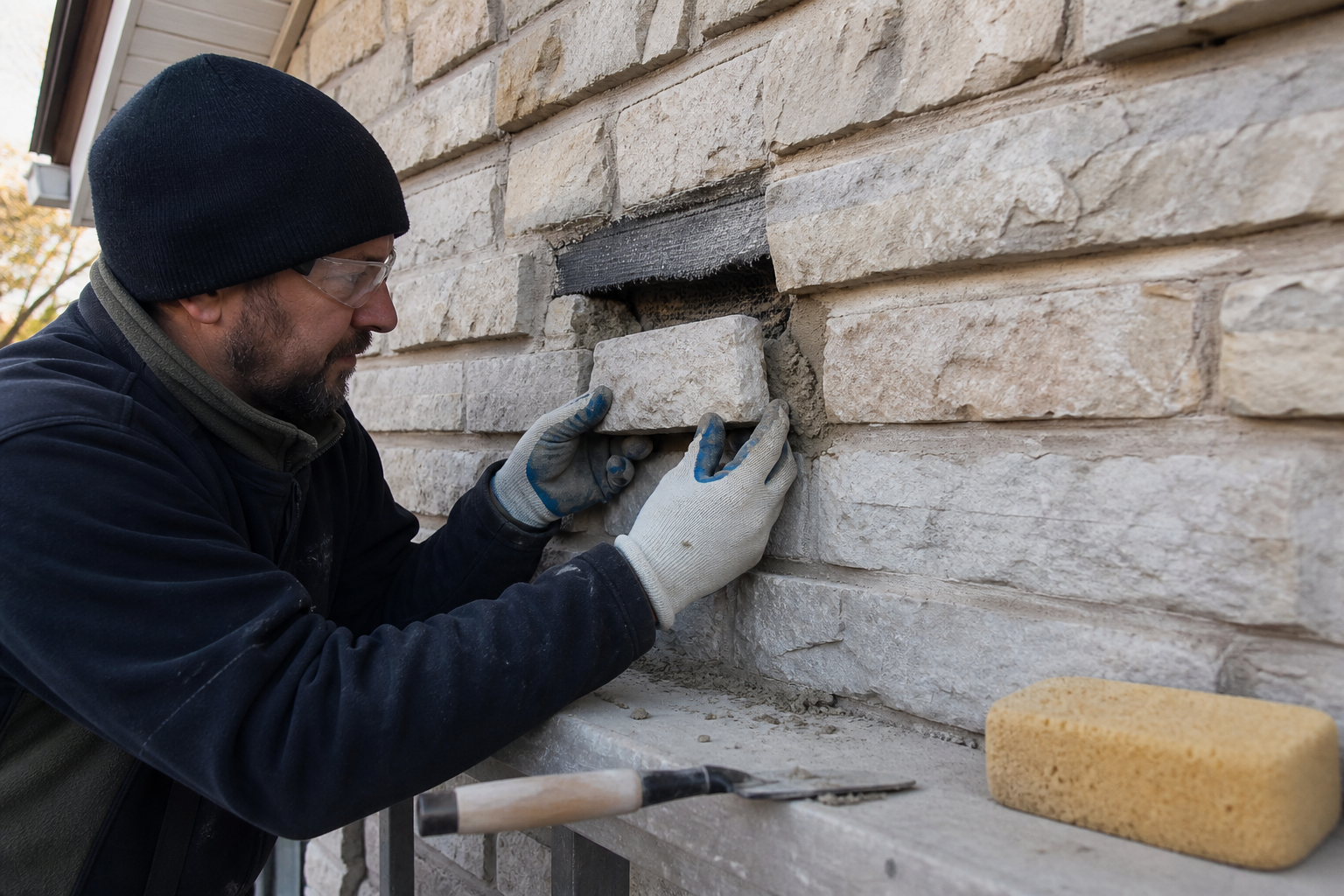
A damaged brick does not always mean an entire wall needs to be rebuilt. When the surrounding wall remains sound, individual bricks or a localized group of bricks may be removed and replaced. This approach can restore the affected area without disturbing masonry that is still performing properly.
Stone Repair and Resetting
Natural and manufactured stone surfaces can develop loose pieces, cracked sections, open joints, and movement around edges or corners. A loose stone may sometimes be reset if it remains usable. A broken or deteriorated piece may need replacement. The correct approach depends on the type of stone, the way it was installed, and the condition of the supporting material behind it.
Mortar Joint Repair
Mortar is intended to hold masonry together while accommodating small amounts of movement and exposure. As mortar ages, joints may crack, erode, or fall away. Open joints allow water to enter and can reduce the stability of nearby brick or stone.
Localized mortar repair may be included when we replace damaged masonry. Walls with widespread joint deterioration may need a more focused tuckpointing and mortar repair plan. That process removes unsound mortar to an appropriate depth and places new mortar into the prepared joints. The new mortar should be compatible with the masonry and finished to complement the existing joint profile.
What Causes Masonry Damage
Water is one of the most common contributors to masonry deterioration in Central Ohio. Moisture can enter through open joints, damaged caps, failed flashing, nearby grading, or repeated exposure to rain and snow. When trapped water freezes, it expands and places pressure on brick, stone, and mortar. Repeated cycles can lead to cracks, loose units, and spalled surfaces.
Other causes include settlement, impact, vegetation, corrosion of embedded metal, and movement between different building materials. Cleaning methods and incompatible coatings can also damage masonry surfaces. Identifying likely contributing conditions helps determine whether a localized repair is appropriate or whether another issue should be addressed first.
Repair, Partial Rebuild, or Replacement
The extent of deterioration helps determine the scope of work. A small area with sound surrounding masonry may be a good candidate for individual unit replacement and mortar repair. A section that is loose, displaced, or extensively deteriorated may require a partial rebuild. Masonry with broad instability or serious supporting problems may need a larger plan.
Not every crack is a structural problem, but cracking that continues to widen, follows a stair pattern, or appears with bowing and displacement deserves closer attention. If conditions suggest movement beyond the masonry itself, an evaluation by an appropriate structural professional may be recommended before repairs proceed.
Our Brick and Stone Repair Process
The process starts with a phone call or a completed Request a Quote form. Tell us where the masonry is located, what you have noticed, and the city or ZIP code for the property. After we connect, we can arrange a time to review the area and discuss the project.
Brick and Stone Repair Frequently Asked Questions
Can individual bricks be replaced?
Yes, individual bricks can often be replaced when the surrounding wall remains sound and the damaged units can be removed safely. The condition of the adjacent mortar and the cause of the damage still need to be considered.
Can new brick or stone match the existing masonry?
A close visual match is often possible, but an exact match cannot be guaranteed. Age, weathering, discontinued materials, and differences between production runs can affect color and texture.
What causes the face of a brick to flake off?
This condition is commonly called spalling. Moisture absorption, freezing and thawing, incompatible coatings, harsh cleaning, or material defects can contribute to it. The surrounding area should be reviewed before the damaged brick is replaced.
Does every masonry crack require rebuilding?
No. Some cracks are loan be repaired, while others may indicate ongoing movement. The pattern, width, location, and changes over time help determine the next step.
Request a Quote!
If cracked brick, loose stone, or deteriorated mortar is affecting your Dublin area property, contact Dublin Masonry to discuss the repair. Call (614) 708-7020 or complete the Request a Quote form to get started.