Chimney Repair and Rebuilding in Dublin, Ohio
Request a Quote!
Contact Us
A masonry chimney stands above the roof where it receives direct exposure to rain, snow, wind, and repeated temperature changes. Cracked mortar, loose brick, damaged crowns, and open joints can allow water to enter and accelerate deterioration. Dublin Masonry provides chimney repair and rebuilding for properties throughout Dublin, Ohio, and nearby communities.
We begin by reviewing the visible masonry and discussing the problems you have noticed. The purpose is to determine whether the chimney needs localized repairs, partial rebuilding, or a broader plan. Call (614) 708-7020 or complete the Request a Quote form to get started.
Signs a Masonry Chimney Needs Repair
Common warning signs include cracked or missing mortar, loose brick, spalled brick faces, leaning sections, gaps near flashing, and pieces of masonry on the roof or ground. Water stains near the fireplace or chimney may also indicate an opening somewhere in the system.
Some conditions develop slowly, while others become more noticeable after winter weather or heavy rain. Loose or falling masonry can create a safety concern, so people should be kept away from the immediate area until the condition can be reviewed.
Chimney Tuckpointing and Mortar Repair
Mortar joints often deteriorate before the surrounding brick. When the brick remains sound and the damage is limited to the joints, tuckpointing may restore the affected area. Unsound mortar is removed to an appropriate depth, the joints are cleaned, and compatible replacement mortar is placed and finished.
Surface coating over loose mortar is not the same as proper joint preparation. The repair should reach sound material so the new mortar can bond to the prepared joint. Widespread erosion, loose brick, or movement may require more than tuckpointing alone.
Damaged Brick Replacement
Individual chimney bricks may crack, spall, or loosen after repeated moisture exposure. When surrounding masonry remains stable, damaged units can sometimes be removed and replaced without rebuilding the entire chimney.
Replacement brick is selected with attention to size, color, texture, and compatibility. An exact visual match cannot always be guaranteed because older brick changes as it weathers and some materials are no longer produced. The surrounding mortar and the cause of the damage should also be considered.
Chimney Crown Repair
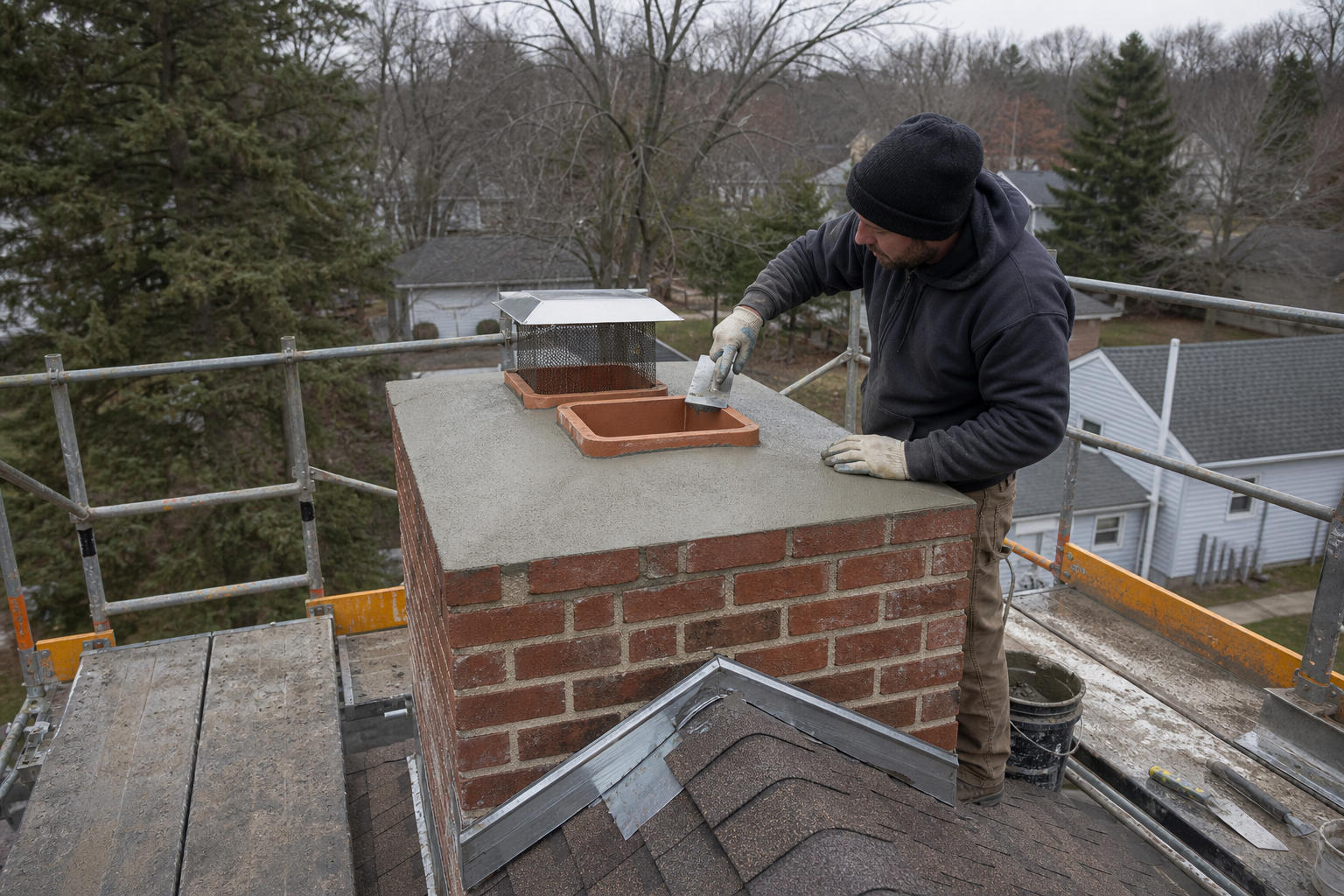
The crown is the protective surface at the top of a masonry chimney. Its purpose is to direct water away from the flue and masonry below. Cracks, open edges, and deteriorated crown material can allow moisture to enter the chimney from above.
The appropriate repair depends on the crown material, the extent of the damage, and the condition of the chimney beneath it. Small defects may be repairable, while extensive deterioration may require crown replacement. Water entry points should be addressed as part of the overall chimney plan.
Partial Chimney Rebuilding
The upper portion of a chimney often receives the greatest weather exposure. When mortar and brick are extensively deteriorated near the top, a partial rebuild may be more practical than repeated localized repairs. The unsound section is removed to stable masonry and rebuilt with suitable materials.
A partial rebuild can address loose units, widespread spalling, and joints that no longer provide reliable support. The final scope depends on the condition discovered after unstable material is removed.
Full Chimney Rebuilding
A chimney with broad instability, severe displacement, or deterioration extending through a large portion of the structure may require a more extensive rebuild. This decision should be based on the visible condition, supporting masonry, access, and any related structural concerns.
If a chimney is leaning or movement appears to continue below the visible masonry, evaluation by an appropriate structural professional may be recommended before rebuilding proceeds. Masonry work should follow a clear plan for the conditions present at the property.
Ohio Weather and Chimney Masonry
Water is one of the greatest contributors to chimney deterioration. Moisture enters open joints and porous materials, then expands when it freezes. Repeated freezing and thawing can loosen mortar, damage brick faces, and widen existing cracks.
Flashing, caps, crowns, roof drainage, and nearby tree exposure can affect how much water reaches the chimney. Repairing damaged masonry is important, but visible water entry conditions should also be considered.
Our Chimney Repair Process
Start by calling or completing the Request a Quote form with your name, phone number, city or ZIP code, and a short description of the chimney condition. After we connect, we can arrange a time to review the masonry and discuss the project.
We consider the damaged area, mortar joints, brick condition, crown, visible movement, access, and related moisture conditions. A quote can then be prepared around the work identified. Any concealed deterioration discovered during removal should be discussed before additional work is performed.
Chimney Repair Frequently Asked Questions
Can a chimney be repaired without rebuilding it?
Yes, localized mortar or brick damage can often be repaired when the surrounding chimney remains stable. Extensive deterioration or movement may require partial or full rebuilding.
What causes chimney bricks to flake?
Moisture absorption and repeated freezing and thawing are common contributors. Damaged crowns, open joints, coatings, and material defects can also play a role.
Does a cracked chimney crown need replacement?
Not always. The correct approach depends on the depth, location, and extent of cracking, as well as the condition of the crown and masonry below.
Request a Quote!
If your chimney has cracked mortar, loose brick, crown damage, or visible deterioration, contact Dublin Masonry. Call (614) 708-7020 or complete the Request a Quote form to discuss chimney repair or rebuilding.